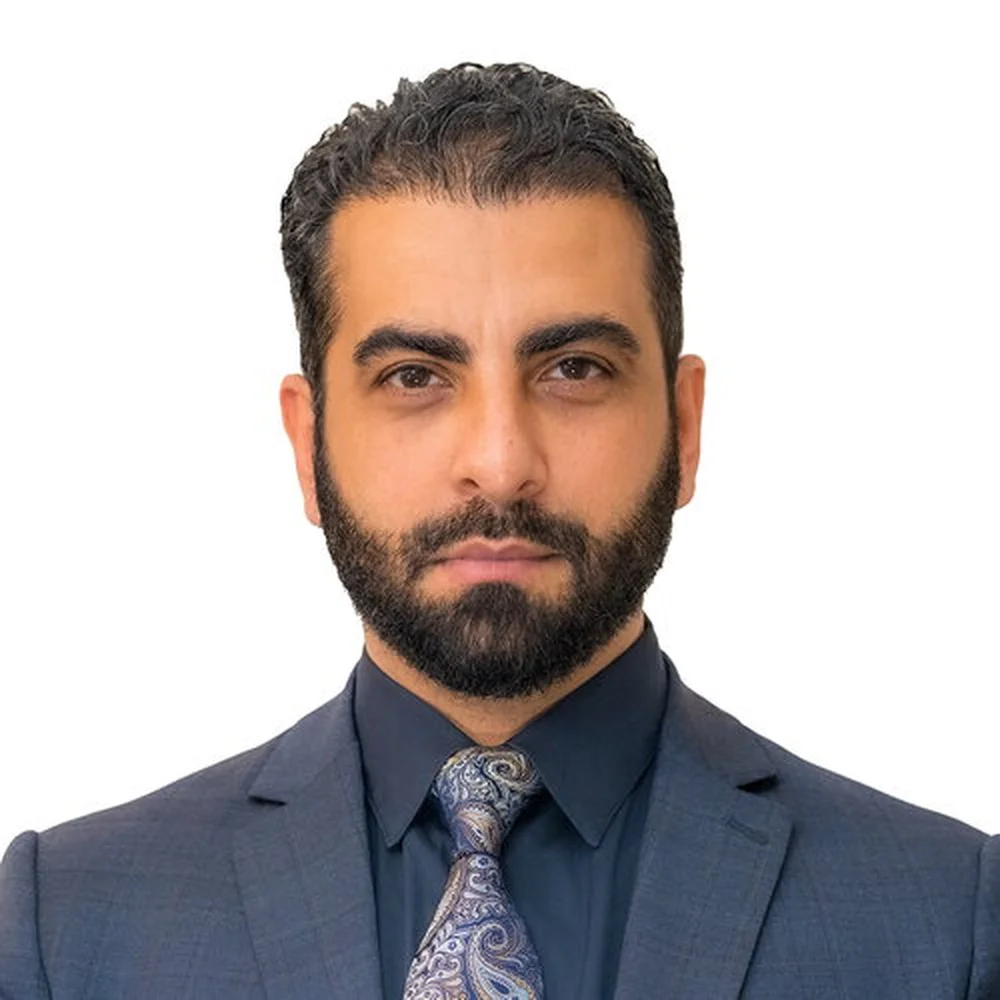
Professor Mukhtar Ali is a scholar of Islamic philosophy and mysticism whose work centers on the school of Ibn ʿArabi. We spoke about his path into the field, his years of traditional study in Iran, the craft of translation, and why he believes poetry still matters. The conversation has been condensed and edited.
ZM: What first drew you to these topics?
MA: I was very interested in the sciences as an undergraduate. Coming from a South Asian background, and with parents who wanted me to become a doctor, that was the expectation. But it didn’t hit home. I felt an inclination toward something more philosophical, something more abstract than the hard, empirical sciences. I settled on philosophy, and that started the whole trajectory; not only Western philosophy but world philosophy, and eventually Islamic philosophy. There was no one to teach it at Berkeley, where I studied, so I had to travel to many places, Iran among them, and learn the languages in order to go deep.
"I felt an inclination toward something more philosophical, something more abstract than the hard, empirical sciences."
ZM: For someone who has never encountered it, how would you introduce Sufism and Ibn ʿArabi?
MA: Sufism is the mystical dimension of Islam, and it has two branches. The first is ethics, the rectification of one’s character. But with Ibn ʿArabi it shifts toward philosophy: the search for the knowledge of reality. The two go together. What sets mysticism apart from theology is that it deals directly with truth. Prayer and fasting are means; the end is reality itself. Ibn ʿArabi was a mystic who had many visions but could set them down with real precision. It wasn’t just poetry, it wasn’t cryptic; it was very clear visions and clear writing. He explained the nature of God, the universe, and the human being in philosophical terms. He is a watershed: There’s pre–Ibn ʿArabi, and then there’s Ibn ʿArabi and his followers. People assume mysticism is random visions and dreams, but the opposite is true. When you look at the school of Ibn ʿArabi, you see a cohesive, consistent, cogent framework for understanding reality and he explained it like a grand theory of the universe.
ZM: You’ve translated major texts. What role does translation play in your work?
MA: Translation is a form of commentary. Each language has its own nafas, its own breath, its own feel, and rendering a text into another language is itself a way of understanding it. Arabic is rich, and its words carry many meanings at once. Take ḥikma, wisdom; it shares a root with ḥukm, rule or judgment; the ḥakīm is the sage, and once meant the physician; and it is the very thing philosophy seeks, since philosophy is the love of wisdom. One word carries all of that. Translation a word like that needs context. You can’t translate it literally. Sometimes the honest solution is to leave a term in the original and let a footnote carry the rest. Words like walāya or tawḥīd have such a rich field of meaning that divine unity or monotheism can feel clunky and thin. This is also why I wanted to see these texts in English, logic, for instance, feels forbidding in Arabic, but the concepts themselves are not that hard once you can think them through in your own language.
“I want to give the student the tools to philosophize.”
ZM: You also teach these texts. What’s your approach?
MA: I often begin by criticizing the title of my own course. It should be called philosophy in the Islamic lands. What’s Islamic about philosophy, when philosophy by definition asks essential questions and assumes nothing? Deconstructing the name is itself a philosophical exercise. My aim isn’t to teach the history of the field: I want to give the student the tools to philosophize. The classroom is a thought experiment and a place to develop a skill, the way a coach or a music teacher does. You can watch tennis videos and learn tennis, but what’s the point of a coach? The purpose of the coach is to impart skills. That’s what I want to do in the classroom.
“Rumi speaks to everyone; the believer, the non-believer, the monotheist, the atheist, because he speaks to the heart.”
ZM: One last thing: what's your parting recommendation? A cultural work you think everyone should engage with?
MA: Poetry. Rumi speaks to everyone; the believer, the non-believer, the monotheist, the atheist, because he speaks to the heart. Poetry has been part of the human experience since the dawn of humanity, but the modern age has pushed it out; in the East it survives as a living tradition, though even there it’s fading. It’s worth recovering. There’s a language in poetry that goes beyond our common notions of language. As someone who studies language and translates, I find it a kind of magic that captivates me like nothing else. Read some Rumi, or Jami, or Hafiz. I don’t think it will disappoint.