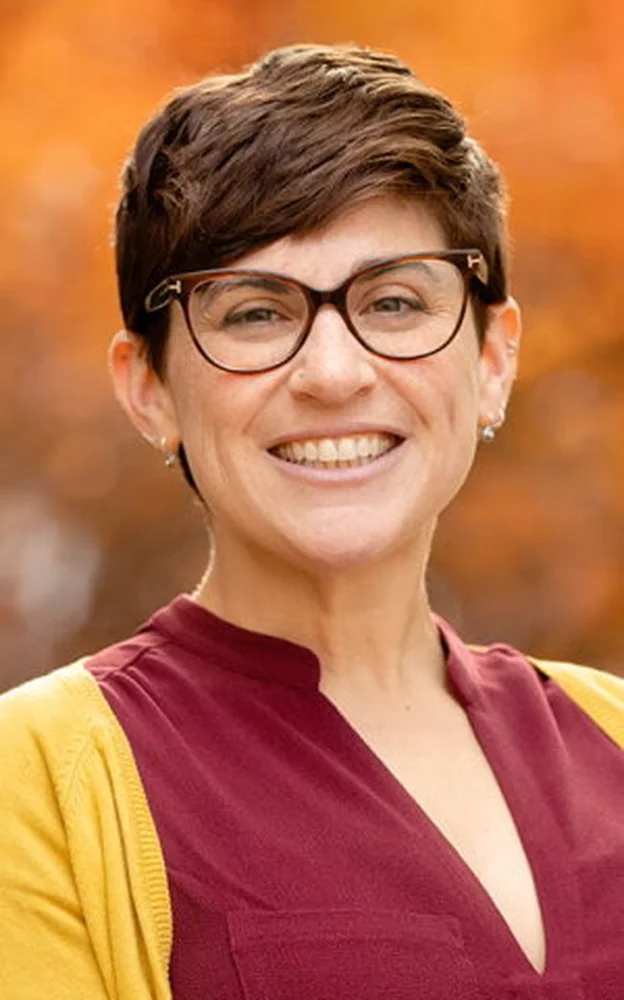
Professor Avital Livny is a political scientist who studies Kurdish and Islamic politics, with Turkey as her main case and fieldwork site. We spoke about her path into the field, the argument of her first book, measuring religiosity from space, and what happens when governments stop counting. The conversation has been condensed and edited.
ZM: What first drew you to these topics?
AL: I always say that my two interests are identity and the Middle East, and where those intersect is my happy place. The identity part comes from my own background. I'm Israeli, and my family immigrated to the States when I was a child. When we went back to visit, it was always a matter of checking whether my brother and I were sufficiently Israeli. I was comfortable being fluid between two worlds, but in America people wanted me to decide whether I was American, and in Israel whether I was Israeli or had left. I became a student of that from the outside. I don't work on the Arab-Israeli conflict, but it seemed such a shame that we couldn't all speak to each other, so I started studying Arabic in college. Turkey came later, and it started off very bureaucratic. At Oxford we had to spend a summer in country, and with American and Israeli passports I couldn't go to Iran to learn Persian. I'd heard Turkish and Arabic together made Persian easier later, so why not have all of the languages. I spent that summer in Istanbul, which is my favorite place on the planet. There was no looking back.
"I was comfortable being fluid between two worlds"
ZM: How would you explain the argument of Trust and the Islamic Advantage?
AL: When I was doing my dissertation research, the assumption was that Erdoğan was popular because people were becoming more religious. But when I talked to people in Turkey about why they voted for him, it was never about religion. It just wasn't about faith. Turkey happens to be a place where generalized social trust, whether you'd trust a stranger, is very low, and when people don't trust each other it's hard to cooperate. A common identity supplies that. The assumption was that when Erdoğan tells people to vote as a Muslim, they look to God. My argument is that they look at each other and say, we'll do this for one another. It's almost a functional argument; it has nothing to do with Islam specifically. Voters for Islamic parties are like voters everywhere.
ZM: You've measured religiosity by satellite, and your new book is about the census. How did "measurement" enter your work?
AL: If you want to study identity, you have to know how people identify, and that's hard in the Middle East: governments don't always collect the statistics, and it's sensitive enough that people may not answer honestly. The satellite idea wasn't originally mine. A colleague mentioned a paper proposing you could measure religiosity through Ramadan, since people who fast stay up later. Nobody had tested it, and I had a lot of Turkish data, so I tried. If you look at how bright the lights are at 2 a.m. right after Ramadan starts, there's more brightness in places that look more religious by other measures. It's a crazy little thing, but it works! The census book comes from the same problem. Turkey long asked about religion and mother tongue, which was a way of identifying Kurds. In 1965 the questions stayed on the census but they stopped publishing the data, and in 1985 they stopped asking altogether, right as the Kurdish political movement was gaining momentum. If governments suppress or manipulate identity data where identity is politicized, we have the worst information about the cases that matter most. We write a lot about identity driving conflict or holding back development. It gives identity a bad rap, when it might be that where religion is more politicized, we have worse information.
"Getting students involved in research is one of the highlights of my career at Illinois"
ZM: You also teach research to undergraduates. What are you trying to do in that classroom?
AL: I just taught my dream course for the first time, an introduction to research for freshmen and sophomores, ninety of them. Methods don't make sense until you apply them, so the first half was best practices in the abstract, and in the second half we built a project as a class: picked a question, developed a theory, and then I ran the test and showed them the results so we could react in real time. My internship program comes from the same impulse: the worry with apprenticeships is that students become free labor, so we pair the research work with lessons about research. Getting students involved in research is one of the highlights of my career at Illinois.
ZM: Based upon your expertise and field of work, what do you think people should seek out?
AL: Turkish food is an underestimated culinary tradition. Sadly we don't have good Turkish food in this town, but there are good places up in Chicago. My favorite is actually a Kurdish restaurant, The Gundis. Get the Kurdish breakfast! It is sometimes called a Turkish breakfast: two people at a big table, and the whole table full of food!