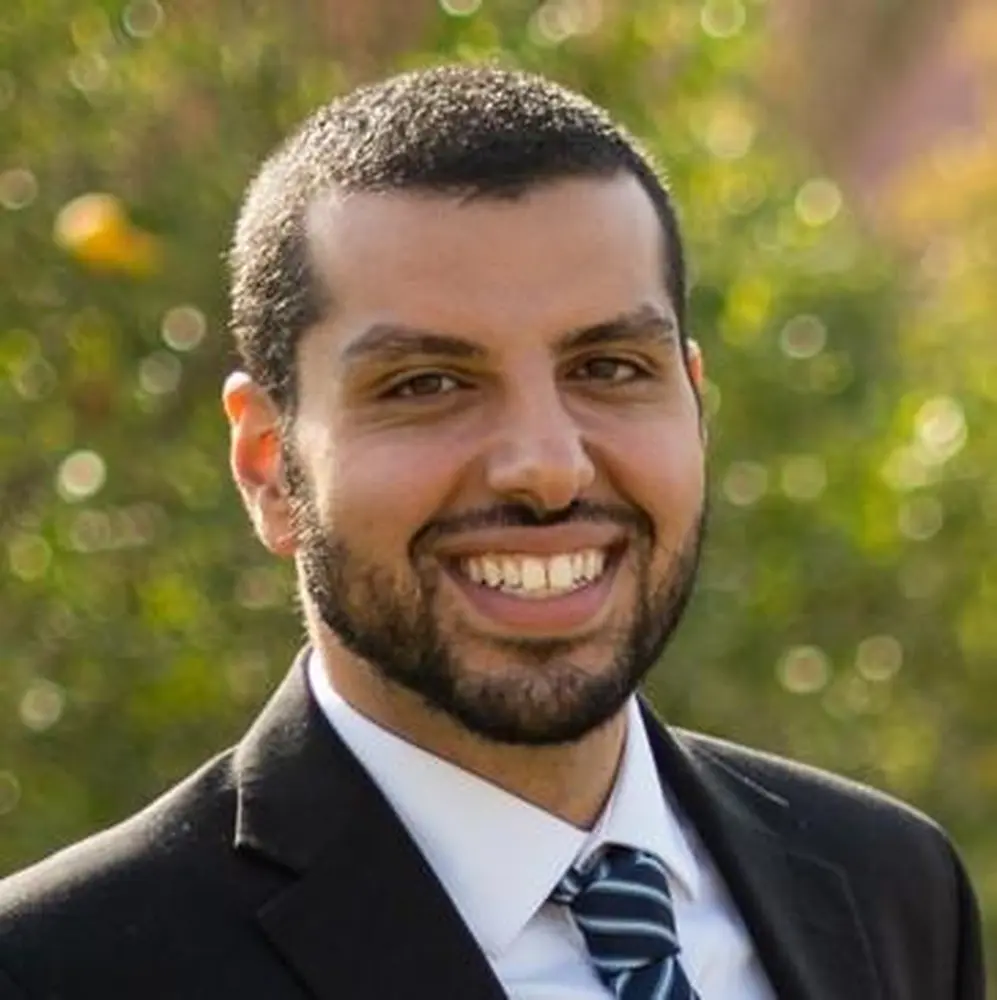
Professor Adam Osman is a development economist who studies poverty and small firms, with Egypt as his main case and fieldwork site. We spoke about his path into the field, what it takes to run experiments where the government would rather you didn't, and what happened when he cut a poverty program in half. The conversation has been condensed and edited.
ZM: Could you tell us a little about yourself?
AO: I’m an associate professor of economics here at the University of Illinois, a development economist. Most of my work is focused on poverty, on how we help poor people in poor countries, and almost all of it is focused on Egypt. My parents are from Egypt. They immigrated to the States in the late ’60s, and I was born and raised in New York and did my PhD at Yale.
The work I do is primarily randomized experiments. Just like in medicine, there are lots of ideas about how to help people, but we want evidence about which ones actually work. So you take a group of people, or villages, split them randomly into a treatment group and a control group, treat some of them, and compare. I’ve probably run close to twenty of these now.
ZM: Are there limitations specific to working in Egypt, or in the Middle East generally?
Osman: The Middle East is a tough place to work. The government is generally not very supportive of research or researchers, and any in-person data collection needs government approval, which makes things tricky. When I started, fifteen years ago, there was very little work being done. It was right around the time of the revolution, and people were extremely suspicious of foreigners. I’m a foreigner but not a foreigner, you know? People can tell my Egyptian Arabic accent isn’t native. In the early days I would often get asked if I was a spy!
Things have changed. I helped build J-PAL MENA, the regional office of MIT’s Abdul Latif Jameel Poverty Action Lab, and we now have very strong relationships with the government. Data is still the hard part, but making progress.
ZM: Can you tell us about a project that led to real change?
AO: One we’re really excited about we call Bab Amal, which means “door of hope.” There’s a big theory in economics called the poverty trap: help the very poorest people only a little and it’s wasted, because investments don’t pay off below a certain size. If I give you a cow and one chicken, that isn’t enough. You’ll spend more time looking after that chicken than it’s worth. Give you a cow and ten chickens, and next time you can have eleven or twelve. So the conclusion people drew was that you have to spend a lot of money on very few people.
We tested that in Egypt with about 4,000 households, running the full program alongside a half-cost version: half the sheep, half the cash, counseling every other week instead of every week. The half-cost program worked about half as well. At first I thought that was the most boring result possible! But it says the poverty trap story isn’t correct, because if it were, the half version wouldn’t have worked at all. It means you can help twice as many people with the same money. The Sawiris Foundation has now announced it will scale the half-cost program up to 50,000 households, and the government is supposed to add another 50,000.
ZM: I am very curious about your experiment with the rug producers. Can you explain it, please?
AO: That was my first big experiment in Egypt. In economics we think some of the gains from trade come from learning: when people in one country trade with people in another, they learn from each other and become more productive. But that’s hard to prove, because firms that export are already better to begin with.
We worked in Fuwwah, a small city near Alexandria with a lot of handmade rug producers, hardly any of whom had ever exported. We got hold of a big export order and randomized who was offered the work. The ones who took it learned a lot and became more productive than the control group. To show it, we had everybody weave an identical rug: same design, same loom, same materials, same pay, for a buyer in Cairo who was me. This is a technology over a thousand years old. I would have thought there was nothing left to learn, so if people can still learn on that scale, the room for learning in newer industries must be much bigger.
ZM: What are you currently working on ?
AO: Financing for small firms. A lot of people believe interest is haram and won’t take a loan at all, so we built a micro-equity product with a lender in Egypt. Instead of repaying with interest, a farmer gets three young sheep, raises them for six months, sells them, and keeps two thirds of the profit while we keep a third. Because the lender shares the loss as well as the gain, a lot of people consider that acceptable. In a few villages we knocked on every door, and 40% of the people who wanted financing wanted equity only.
ZM: I close these interviews with a recommendation. What is one cultural product you’d recommend?
AO: People should definitely go to the pyramids! You look at the pictures and they look really cool, but when you get up next to them it’s just shocking how big they are. I go a lot, and every single time, I think, man! these things are so cool!