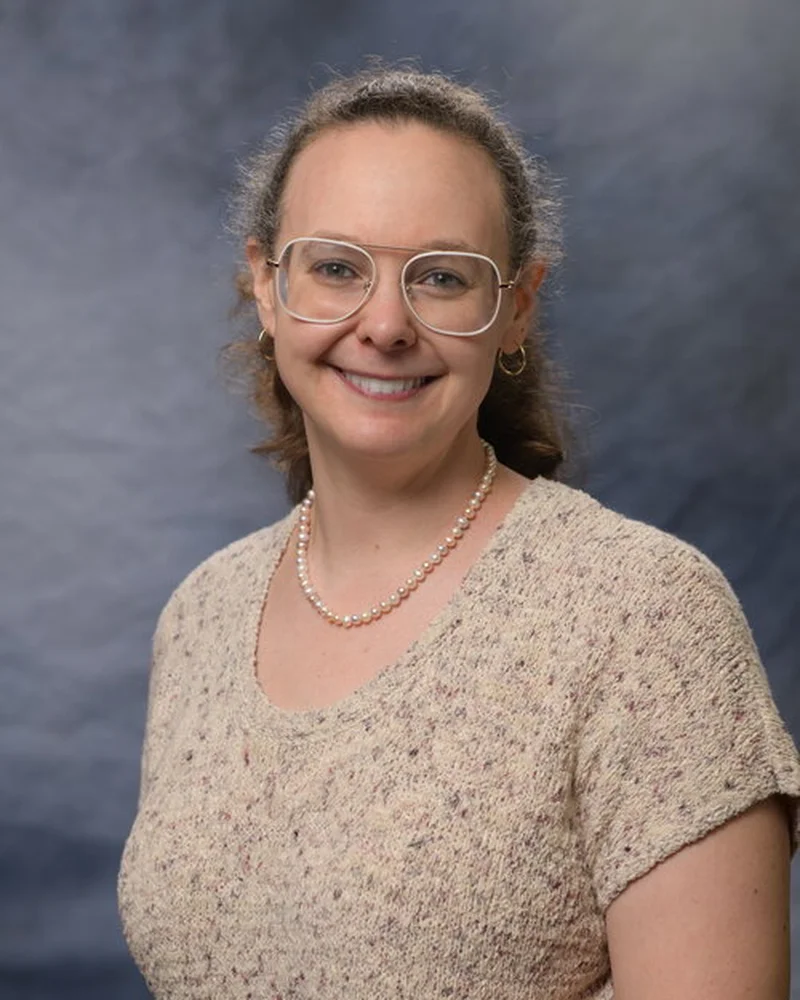
Professor Laura Frances Goffman is a historian of the modern Middle East. Her first book, Disorder and Diagnosis (Stanford University Press, 2024), uses disease to write the social history of the Gulf. We spoke about working when the archives are closed, and the Harvard scientists who spent two decades testing trachoma vaccines on Aramco's local workforce. The conversation has been condensed and edited.
ZM: Thank you for being here, Professor Goffman! Tell us about what got you here as assistant professor of Middle Eastern history.
LG: The older you get, the harder it gets to narrate this! I started at Grinnell College, in Iowa, and became active in a group in solidarity with Palestine after we were assigned Rashid Khalidi's Palestinian Identity in one of my classes. I read it and, naively, as an eighteen-year-old, I thought: if everyone knew this history, politics would be completely different. Part of me, in my naiveté, has always held on to that belief, and it keeps me going. Grinnell had no Middle East history then, so I spent a year at the American University in Cairo. Then I graduated and was rejected from every PhD program I applied to!
ZM: Really? What happened?
LG: Yes, and I'm happy to share that, because rejection is very normal! I did an MA at NYU first, and something I got out of those two years was that the programs had been right to reject me. I didn't know enough. One of the most important things you do in a PhD is conceptualize an original research project, and you have to spend many, many years reading before you can do this. Activism and scholarship are very connected, but they're not the same. A conviction isn't enough to prepare you to make an intervention into knowledge.
I've always been interested in is everyday people: how big events mean something to their lives, or not, and how their lives in turn mean something to big events.
ZM: How did you land on the Gulf, and on disease?
LG: By accident, mostly. At Georgetown, I told a professor I didn't know what to work on, and he said -I think he was joking- "Oh, just go work on Oman." And I thought, well, that sounds very interesting! There was very little social history focusing on the Arabian Peninsula side of the Persian Gulf at that point. But what I've always been interested in is everyday people: how big events mean something to their lives, or not, and how their lives in turn mean something to big events.
I won a Fulbright-Hays to work in Oman, Oman wouldn't give me a research visa, and I frantically rewrote the dissertation proposal around Qatar. Before going to Qatar, I was working in the India Office Records in London, and I have a vivid memory of a document produced by a British agent writing about a date garden in the Gulf, mentioning in passing an enslaved boy there who had malaria. And I thought: this is how this otherwise invisible boy enters the record. Because he has a disease that the observer recognizes, and if the boy has it, then the observer is at risk too.
ZM: What’s the source of your research material?
LG: One reason my first book is all over the place geographically is that I had to piece together stories from material that didn't rely on state archives. I collected local Arabic publications from across the region, and I argue in the book that these constitute an archive themselves: material still very underutilized in the North American and European scholarship on the Middle East. On my recent trip to Cairo I worked in three libraries, none of them state libraries, and I tried to focus on popular discourse and lived experiences.
ZM: One of your findings I found especially interesting was on oil, and your comparison to Tuskegee.
LG: That came out of the Aramco oral histories, recorded in the 1990s with former American company medical personnel. They were boastful about the cutting-edge research they'd conducted in Eastern Arabia using Aramco money. What was fascinating is that they decided to conduct research before they knew what they were going to research; something about being a modern developmentalist project in a developing space simply entailed science. Which raises the question (and this is why Tuskegee matters) of what made it their next logical step to use non-white, disadvantaged populations for medical research. It came almost automatically to them.
They settled on trachoma, an eye disease. If you have access to running water, your chances of contracting trachoma drop precipitously. These scientists knew that, and their response was: wonderful, now we have populations we can compare. Arabs in the town sites Aramco built for its employees, versus Arabs in village sites without running water. And isn't it convenient that they're all Arabs, so we can rule out race as a variable. They understood that differences in the environments being produced and maintained by Aramco’s labor policies were making people sick, and they took all this research money to use the people who were sick to test vaccines, on babies and children, without informed consent, and sometimes with negative side effects. One doctor says he asked why they didn't just give people running water instead.
What's remarkable is that I didn't discover secrets. It was all published material, a matter of reading it and putting it in context. And the point isn't that their study failed, though there's still no trachoma vaccine. The point is the ethics of the process.
ZM: Which class do you think any undergraduate must take?
LG: My 300-level classes, which are built around historiography. We read a lot of very new work. I see teaching as a chance to tell students, especially those born and raised in the United States, things they should already know but don't. It's also emotionally difficult, because I'm introducing them to a lot of extremely sad and painful histories, of which I relive the process of learning over and over. But I do believe in studying and teaching history. And it does seem like something I can do well in this world!
ZM: I close these interviews with a recommendation. What do you recommend to the readers of this interview?
LG: My Brother, My Land by Sami Hermez and Sireen Sawalha. Hermez is an anthropologist who built a friendship and an oral history over decades with a Palestinian woman from a village near Jenin, whose brother was a resistance fighter imprisoned several times. It's their family's story in her voice, with his analysis alongside it, and it reads almost like a novel.